Research Highlights
My research focuses on the mechanisms and impact of stellar flares on planet formation and habitability, as well as the characterization and modeling of exoplanet atmospheres.
Probing Non-Thermal Processes in Stellar Flares
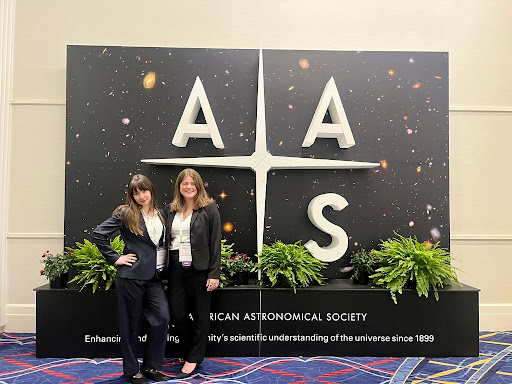
In this research, conducted under the guidance of Dr. Adam Kowalski and Dr. Adina Feinstein, I utilized Hubble Space Telescope/Cosmic Origins Spectrograph observations of the young M-dwarf AU Mic to characterize its stellar flare atmosphere, with the initial goal of searching for non-thermal proton beams during flares. I identified, modeled, and calculated the properties of the observed flares and compared my findings with those in the literature. In my research, I worked with stellar flare models and explored the current successes and failures of these models. I also discussed in depth the effects of stellar flaring on exoplanet atmospheres and habitability. I presented my research via an iposter presentation at the 245th American Astronomical Society meeting, as well as the 2025 Conference for Undergraduate Women and Gender Minorities in Physics and the 2025 CU Boulder Undergraduate Research Expo. My first author paper on this research has been accepted by The Astrophysical Journal. This research served as the subject of my undergraduate Latin honors thesis, completed in my third year, and I received the honors designation of Magna Cum Laude; I published this research in the CU honors journal.
.heic.png)
TESS Photometry of Extreme Debris Disk RZ Psc
See the Nature Research Highlight.
See the Scientific American Article.
With Dr. Meredith MacGregor as my research advisor, I conducted a study searching for exocomets in extreme debris disks using observations from The Transiting Exoplanet Survey Satellite. I was awarded two Undergraduate Research Opportunity grants to pursue this research. I presented this research at the 2024 Conference for Undergraduate Women and Gender Minorities in Physics and the 2024 CU Boulder Undergraduate Research Expo. I detected 24 exocomets in the extreme debris disk around RZ Psc. I modeled these exocomets and calculated their properties, comparing them to populations found in other systems and our solar system, and analyzed the potential of exocomet science in the context of habitable planet formation. I got experience modeling, characterizing, and removing stellar variability through Gaussian Process modeling. My first author paper on this research has been accepted by The Astrophysical Journal Letters.
Atmospheric Characterization
In Summer 2025, I worked with Professor Adina Feinstein at Michigan State University, where I utilized high-resolution spectroscopy observations obtained with Gemini-S/IGRINS to investigate the atmospheric properties of a young planet. In this research, I am implementing a new machine learning technique to model the stellar and telluric components, allowing for the analysis of the spectrum to determine atmospheric composition. I presented my research at the High-Resolution Spectroscopy for Exoplanet Atmospheres Workshop.
.png)
Outreach & Teaching
CU Astronomy Club
I was the Social Media Content Lead for the CU Astronomy Club. CUAC Website
Teaching

- Learning Assistant for ASTR 2600 - Introduction to Scientific Programming.
- Grader for ASTR 2600 - Introduction to Scientific Programming.
- Grader for ASTR 1010 - Introductory Astronomy: The Solar System w/Lab.
- Grader for ASTR 1020 - Introductory Astronomy: Stars & Galaxies w/Lab.
About Me
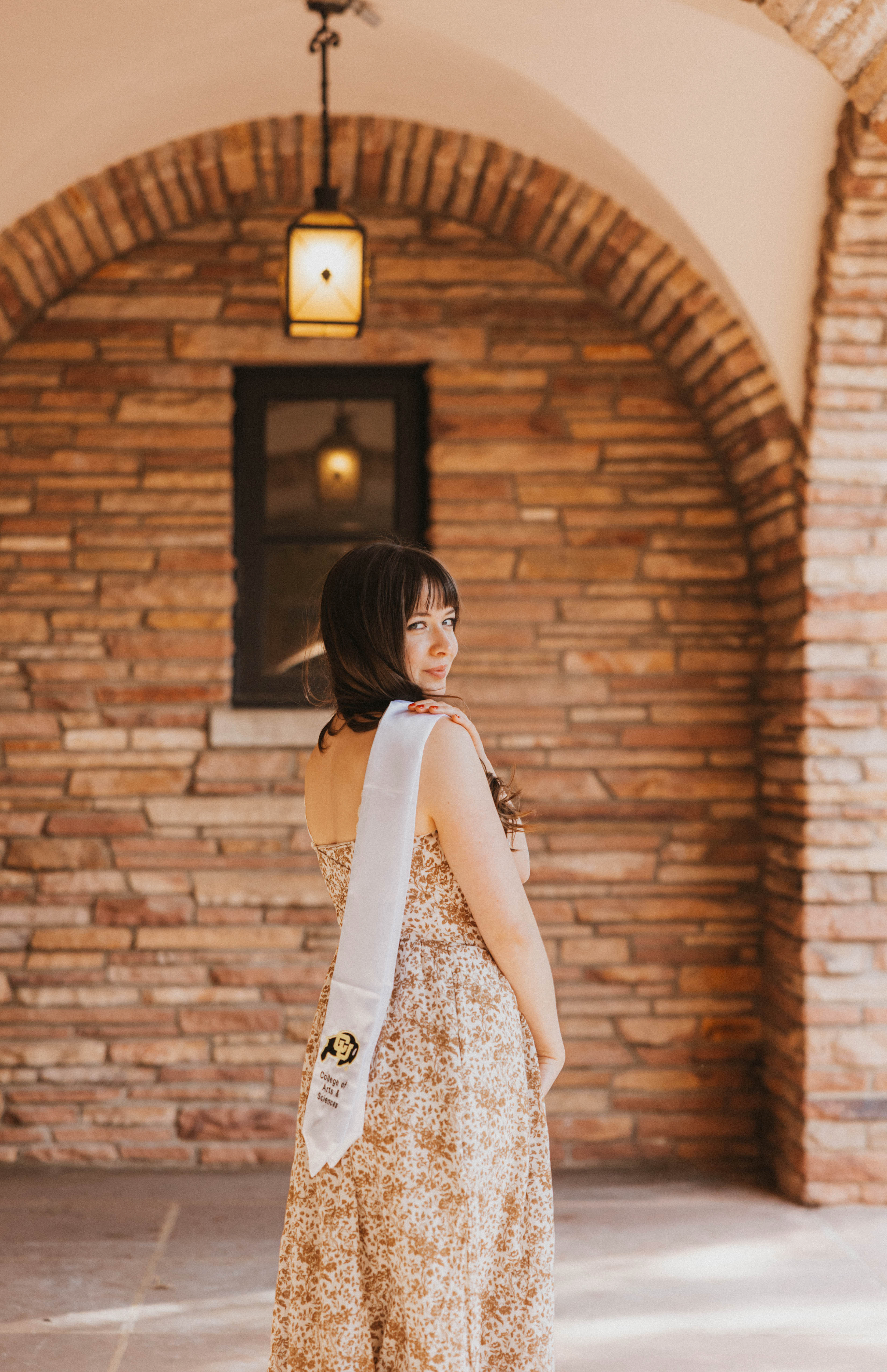
I am a 1st-year graduate student in the Physics and Astronomy department at Michigan State University. If you would like to discuss science, feel free to contact me: gibso301 [at] msu [dot] edu
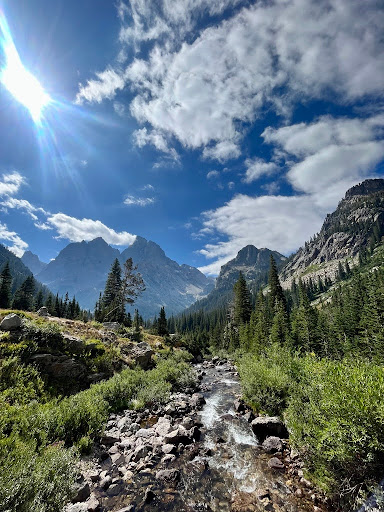
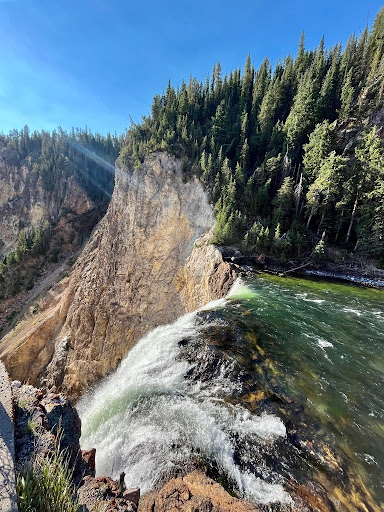
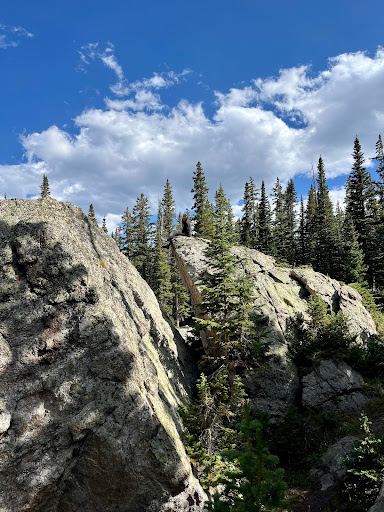
When I'm not doing astronomy, I like to spend as much time outside as possible, hiking, paddleboarding, or swimming.